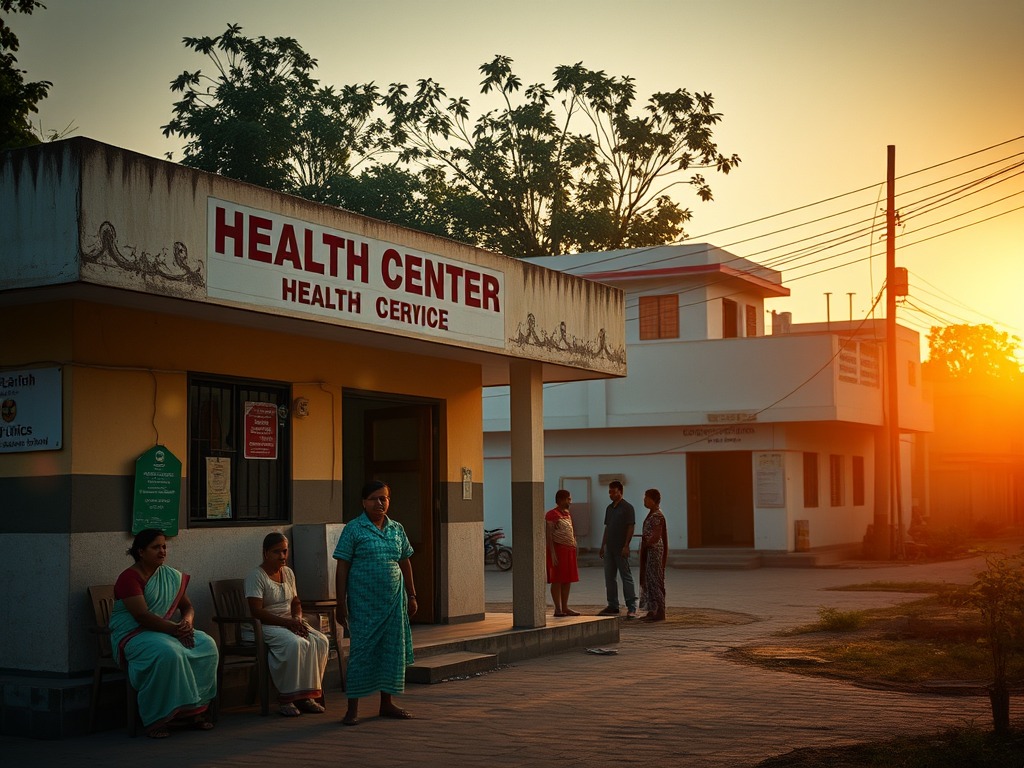
Rural Health Statistics: Unveiling the Healthcare Reality
The National Rural Health Statistics Report (RHS) 2019–20 published through the National Rural Health Mission portrays a predictable picture of the shortfall of specialist doctors in Community Health Centers (CHCs) in rural India. Year after year, and report after report, the shortfall remains predictably constant.
But Does It Represent the Real Picture of Healthcare in India?
To start with, let’s agree on some given facts—healthcare in India is increasingly private-driven.
Ask any citizen on the road two questions:
- Would you prefer government or private healthcare if you had a choice?
The answer will be “private” in the majority of cases. - Why have you come to a government setup to avail healthcare?
“Because I cannot afford private healthcare” will often be the answer.
The reasons for such predictable answers merit a discussion of their own.
The Role of Community Health Centers
A Community Health Center (CHC) serves a population of around 1,65,000 people (RHS Report 2019–20) in rural areas and covers an average area with a radius of 13 kilometres.
In most parts of India, there exists some form of private healthcare facility within the area served by a CHC.
For example, Chakaltore CHC in Purulia district of West Bengal has at least five nursing homes or private hospitals operating within the same area covered by the CHC, along with many private clinics. These facilities are served by doctors who work in the CHC as well as specialist doctors employed in private practice.
So, is there really a shortfall of specialist doctors serving the area covered by Chakaltore CHC?
Probably not.
Looking Beyond Government Healthcare Data
The Ministry of Health and Family Welfare (MoHFW) should probably rationalise its reports and integrate data from both private and government healthcare facilities to present a truer picture.
Of course, vast areas of the country would still be understaffed in terms of specialist doctors and the facilities required for them to practise.
However, there will also be many districts that already have sufficient healthcare facilities. The aim should therefore be to identify districts with genuine lacunae and provide focused attention regarding staffing in such places.
With Clinical Establishment Acts being applied in many states, gathering data about private healthcare facilities should not be a difficult task.
Conclusion
As such, the Rural Health Statistics Report follows a self-fulfilling, repetitive pattern which, though essential, does little to present the true healthcare scenario in rural areas.
Integrating private and government healthcare facility data will provide representative information on the actual availability of healthcare services at the Community Health Center level.
